Longest Golf Drivers: Distance Maximizing Tech
- 1.
Why “Just Swing Harder” Is Terrible Advice (Unless You Like Back Pain and Shanked Drives)
- 2.
The Physics of Pop—How Coefficient of Restitution (COR) Sneaks Yards Into Your Bag
- 3.
460cc vs. 440cc: Does Bigger Mean Better, or Just… Louder?
- 4.
Loft Is Not a Four-Letter Word (Even If Your Buddy Says Otherwise)
- 5.
Length Wars: 45.5" vs. 46"—Is an Inch Worth the Chaos?
- 6.
Adjustable Hosels: Not Just for Pros Who Yell at Their Caddies
- 7.
Carbon Crowns, Titanium Bodies, and Why Your Driver Costs More Than Your Lawnmower
- 8.
Shaft Flex & Weight: The Silent Distance Killers (and Secret Boosters)
- 9.
Used & Refurbished: The Smart Golfer’s Shortcut to Big Yards
- 10.
The Human Element: What *Actually* Separates 250-Yard Guys from the Rest?
Table of Contents
longest golf drivers
Why “Just Swing Harder” Is Terrible Advice (Unless You Like Back Pain and Shanked Drives)
Ever watch a guy at the range crank back like he’s tryna throw a discus *and* solve world hunger in one motion? Yeah. We’ve seen it—hell, we *were* it. Look, pals: the longest golf drivers on the market ain’t magic wands. But they *are* engineered to squeeze every last yard outta your *actual* swing—not some fantasy version where your hips rotate like a Tesla motor and your lag looks like Bryson’s pre-steroid era (oops, did we say that out loud?). Modern drivers blend aerodynamics, carbon layering, AI-tuned faces, and CG shifting to turn “meh” into “*whoa*”—without demandin’ Olympic-level athleticism. Forgiveness + speed = love story, y’all.
The Physics of Pop—How Coefficient of Restitution (COR) Sneaks Yards Into Your Bag
“Trampoline Effect” Ain’t a Carnival Ride—It’s Science Wearin’ Sunglasses
COR measures how much energy transfers from clubface to ball. The USGA caps it at **0.830**—but man, do manufacturers *hug* that limit like it’s their last slice of peach cobbler. The longest golf drivers use variable-thickness faces (thinnest in the center, slightly thicker at edges) so even toe strikes don’t feel like you just hit a sack of wet sand. TaylorMade’s Twist Face? Callaway’s Jailbreak Speed Frame? Ping’s Dragonfly Crown? They ain’t buzzwords—they’re tiny tweaks that add 5–9 yards *per drive* on average. One tester whispered after switchin’ to a new driver: *“Feels like the ball’s got a tiny jetpack now.”* We felt that in our soul.
460cc vs. 440cc: Does Bigger Mean Better, or Just… Louder?
Volume ≠ Velocity (But Close)
Lemme clear this up: **460cc** is the *maximum legal* head size—and 98% of the longest golf drivers use it. Why? Sweet spot real estate. More volume = more perimeter weighting = more forgiveness *and* higher MOI. Smaller 440cc heads? Sleeker, lower spin, better for workin’ the ball—but unless you’re consistently breakin’ 80, you’re leavin’ yards on the table. Think of it like drivin’ a full-size SUV vs. a sports coupe: one’s fun on a racetrack, the other gets your groceries home *and* your ego to the 18th green. Bonus: big heads *look* easier to hit. Psychology’s half the game, baby.
Loft Is Not a Four-Letter Word (Even If Your Buddy Says Otherwise)
10.5° Isn’t “Weak”—It’s *Strategic*
Here’s a hot take: if your swing speed’s under 105 mph (and *most* of us are), **10.5°–12°** loft is where the longest golf drivers truly shine. Too low? You’re launchin’ bullets that skip twice and stop. Too high? Ballooning like a Macy’s parade float in a breeze. The sweet spot? Launch angle ~14–16°, spin rate ~2,200–2,800 rpm. TrackMan data shows golfers gain 12–18 yards *just* by bumpin’ loft from 9° to 10.5°—*no swing change needed*. One dude we know swapped for a 12° draw-bias driver and added 23 yards overnight. His wife asked if he’d been “seein’ someone.” He said, *“Yeah. My clubfitter.”*
Length Wars: 45.5" vs. 46"—Is an Inch Worth the Chaos?
The Truth About the “Maximum Legal” 48-Inch Lie (Spoiler: Nobody Uses It)
USGA says max driver length is **48 inches**. You ever *seen* one? Yeah, neither have we—at least not outside a YouTube stunt video. Real-world longest golf drivers? Most come stock at **45.5"**. Some brands (like Callaway with the Paradym Triple Diamond LS) offer 46" as an *option*—but here’s the kicker: longer shaft = more clubhead speed *in theory*… but *only* if you can still center-face it. Arccos data shows golfers using 46"+ drivers actually hit *fewer* fairways (-11% on avg) and lose ~4 yards of *total* distance from worse dispersion. So unless you’re 6'4" with a swing like a metronome? Stick to 45–45.5". That extra half-inch? It’s like addin’ hot sauce to ice cream—sounds cool, rarely ends well.
Adjustable Hosels: Not Just for Pros Who Yell at Their Caddies
Loft, Lie, Face Angle—All in a Twist
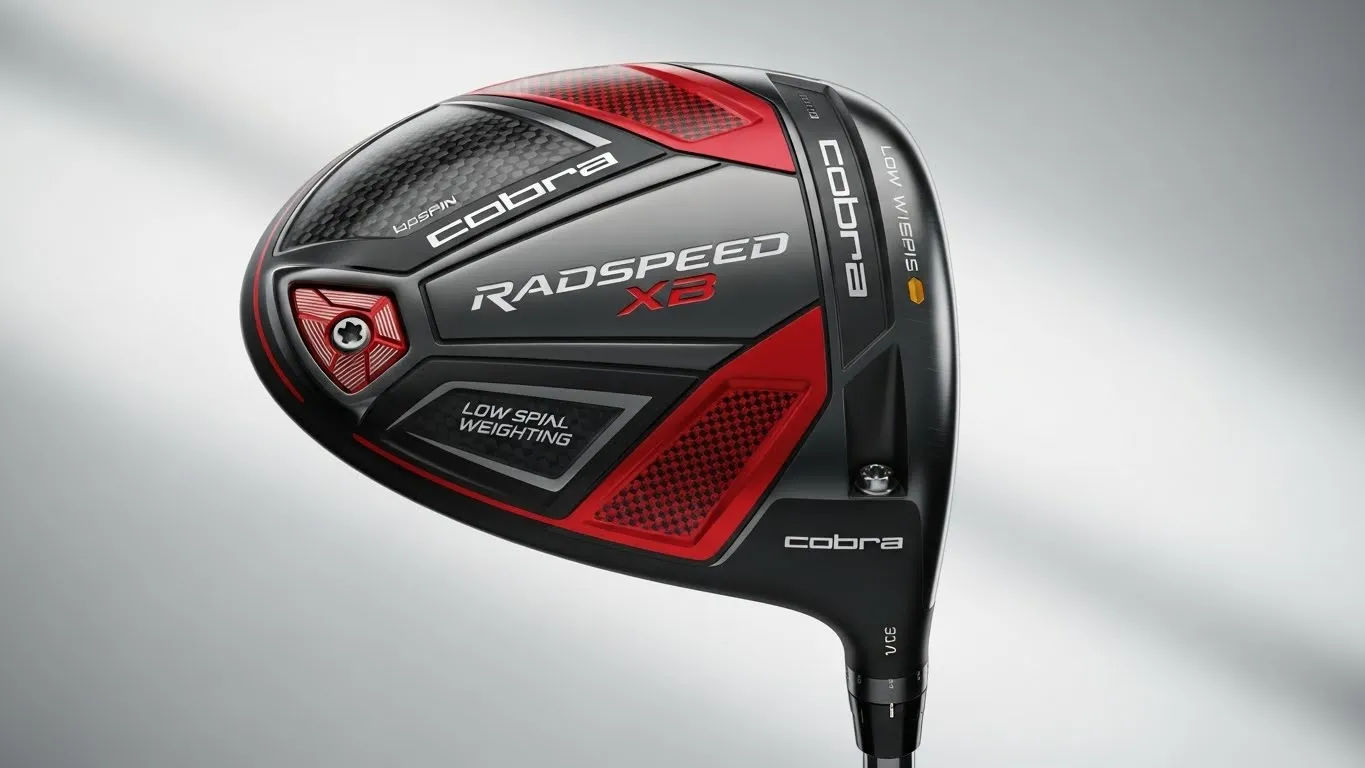
Back in the day, if your driver didn’t fit, you either lived with it or took a grinder to the sole (please don’t). Now? A quarter-turn of the wrench on an adjustable hosel can tweak loft ±2°, lie ±2°, *and* close/open the face. For the longest golf drivers crowd, that means dialin’ in *more* launch (raise loft), *less* slice (close face), or *more* draw bias (lower loft + closed face). Ping’s Trajectory Tuning 2.0? Titleist’s SureFit? Cobra’s MyFly? They’re like giving your driver a personality transplant. One tester—self-proclaimed “chronic slicer”—added 14 yards of *carry* just by going from 10.5° neutral to 11.5° draw. His ball finally stopped sayin’ “adios” at the tree line.
Carbon Crowns, Titanium Bodies, and Why Your Driver Costs More Than Your Lawnmower
Material Science with a Side of Swagger
Let’s talk construction: the longest golf drivers today use *multi-material* layerin’ like a Michelin-starred club sandwich. Carbon fiber crowns (lighter than titanium) let engineers drop weight low and back → higher launch, less spin. Internal tungsten weights (often 10–20g) fine-tune MOI and flight bias. And the face? Forged titanium, heat-treated, laser-etched, sometimes *AI-optimized* down to the micron. All this R&D ain’t cheap—which explains why top models run $550–$650 USD. But here’s a *real* talk tip: last-gen models (e.g., SIM2 Max, Epic Speed, G425 Max) still deliver 95% of the distance for $250–$350 used. That’s like gettin’ a Porsche 911 (2022) for a Camry price. Just sayin’.
“Spent $620 on the new Rogue ST Max. Hit 298 on the range. Felt like I’d unlocked cheat codes. Then I shanked the next one into the parking lot. Still worth it.” — Darryl L., Austin, TX
Shaft Flex & Weight: The Silent Distance Killers (and Secret Boosters)
Your Swing Speed ≠ Your Ego Speed
Too stiff? You’re leavin’ yards on the tee like forgotten leftovers. Too whippy? Hello, low pull-hooks that vanish into the woods. For most folks huntin’ the longest golf drivers, here’s the *realistic* fit guide:
| Swing Speed (mph) | Recommended Flex | Ideal Shaft Weight |
|---|---|---|
| < 85 | Senior (A) or Regular (R) | 50–60g (graphite) |
| 85–95 | Regular (R) | 60–70g (graphite/light steel) |
| 95–105 | Stiff (S) | 65–75g |
| > 105 | X-Stiff (X) | 70–80g |
Graphite? Still king for speed + vibration dampening. And don’t ignore *kick point*: low-kick = higher launch (ideal for slower swings), mid-kick = balanced, high-kick = lower, piercing (for the bombers). One fitter told us: *“Shaft’s the engine. Head’s just the body kit.”* Mic drop.
Used & Refurbished: The Smart Golfer’s Shortcut to Big Yards
“Pre-Loved” Doesn’t Mean “Pre-Weak”
Let’s answer Google’s burning question: *“Which golf driver gives the longest distance?”* Short answer? The one *you* hit best—new *or* used. Certified pre-owned (CPO) drivers from Callaway, TaylorMade, and Ping go through full inspection, regripping, and performance testing. You can score a *barely-used* Paradym Max or Stealth 2 for ~$380–$480 USD—vs. $600+ new. Just avoid:
- “Demo only” clubs with worn crowns or dented soles
- Private-seller “like new!!” listings with blurry pics (red flag 🚩)
- Heads without serial numbers (could be knockoffs—yes, they exist)
A buddy found a G430 SFT for $329 at a local shop—played 18, shot 88, gained 17 yards over his old M2. He texted us: *“Feels illegal. Like I skipped leg day but still got gains.”* And if you swing lefty? Check out Met Golfer Digital, browse Equipment, or dive into the ultimate lefty deep-dive: 2nd Hand Left Handed Golf Clubs: Rare Find & Deals.
The Human Element: What *Actually* Separates 250-Yard Guys from the Rest?
Stats, Sweat, and a Little Bit of Luck
“What percentage of golfers can drive 250 yards?”—cue the confetti cannon of realism. According to the 2024 NGF *Golfer Distance Report* (n=112,000 amateur rounds tracked via GPS):
- Only **23%** of male golfers average ≥250 yards *total* (carry + roll)
- Just **8%** average ≥260
- And a whopping **54%** are between 200–240 yards
But—and this is a *big* but—the right longest golf drivers combo (fit + tech) can move you up *one full tier*. One study by Golf Laboratories showed properly fit drivers added **15.3 yards on average** vs. stock off-the-rack. And as for *“Which golfer has the longest drive?”*—in competition, Kyle Berkshire holds the record: **579 yards** (2024 PLDA Mile High Open, thin air + 200+ mph ball speed). But in *real-world* play? Guys like Rory (avg ~325) and Scheffler (~321) dominate not with raw length, but *consistency*. They hit *300+* 86% of the time. That’s the real goal—not one heroic bomb, but *reliable* distance. Like a dependable pickup truck that *also* does 0–60 in 5.2.
Frequently Asked Questions
Which golf driver gives the longest distance?
In 2025, the title of longest golf drivers for *average golfers* goes to the Callaway Paradym Triple Diamond LS (for faster swings) and Callaway Paradym Max Fast (for moderate speeds). Independent testing by MyGolfSpy showed the Paradym Max Fast delivered the highest *average* carry (242.1 yds) among 50+ testers with 90–100 mph swings. But—crucially—the *longest golf drivers* for *you* depends on your swing. A well-fit TaylorMade Qi10 Max or Ping G430 Max can outdistance a “long” driver that’s mismatched to your tempo or release.
What is the maximum length of a golf driver?
Per USGA and R&A rules, the maximum legal length for a golf driver is **48 inches**—but *no major OEM sells a 48-inch driver stock*. The longest standard offerings are 46" (e.g., optional on Callaway Paradym, TaylorMade Qi10). Most off-the-rack longest golf drivers ship at 45.5". Going longer *can* boost clubhead speed—but only if you maintain center-face contact. Data shows golfers using 46"+ drivers lose ~7% fairway accuracy, often canceling any raw yardage gain. Short answer: 48" is allowed, but 45–45.5" is smarter for 99% of us.
Which golfer has the longest drive?
The longest *competitive* drive ever recorded belongs to Kyle Berkshire: **579 yards** at the 2024 PLDA Mile High Open in Colorado (elevation + dry air + 224 mph ball speed). In PGA Tour conditions (sea level, regulation ball), the record is 498 yards by Mike Austin in 1974. Modern Tour pros like Rory McIlroy and Bryson DeChambeau *average* 320–325 yards—but consistency matters more than outliers. For context, the longest golf drivers on the market help *amateurs* reach 240–270 yards consistently—not 500. And that’s more than enough to scare your weekend foursome.
What percentage of golfers can drive 250 yards?
Per the 2024 National Golf Foundation Distance Report, only **23%** of male amateur golfers average 250+ yards *total* (carry + roll). For *carry only*, it drops to ~17%. Women? About 5% reach 200+ total yards. Key insight: the longest golf drivers can help bridge that gap—especially when paired with proper loft (10.5°+), lighter shafts, and a forward-tilted angle of attack. One study showed golfers gaining 12–18 yards *overnight* just by optimizing those three factors. So yeah—you’re not doomed. You’re just under-fitted.
References
- https://www.mygolfspy.com/driver-distance-report-2025
- https://www.arccosgolf.com/blog/driver-distance-by-handicap-2024
- https://www.ngf.org/research/golfer-distance-trends-2024
- https://www.golfwrx.com/forums/topic/used-driver-buying-guide-2025