Sending Golf Clubs: Safe Shipping Guide
- 1.
Ever Tried Checking a Golf Bag Like It’s Just Another Carry-On? Yeah… That Didn’t End Well
- 2.
Plane vs. Ground: The Great Golf Club Transport Debate (Spoiler: It’s Not About Speed)
- 3.
Shipping Services Showdown: Ship Sticks, Club Hub, or DIY with UPS?
- 4.
Baggage Prep 101: How to Pack Like a Pro (Even If Your Swing’s Still “Work in Progress”)
- 5.
The International Wildcard: When Your Dream Trip Needs a Visa… and So Do Your Clubs
- 6.
Airline Policies Decoded: Because “Oversize” Doesn’t Mean What You Think It Means
- 7.
DIY Shipping: When You’re Cheap, Stubborn, and Own a Tape Gun
- 8.
Timing Is Everything: Why Shipping 5 Days Out Beats “Overnight” Every Time
- 9.
Real-World Cost Breakdown: 3 Scenarios, 3 Prices, 1 Winner
- 10.
Pro Tips—From Guys Who’ve Shipped 10,000+ Sets (and Only Cried Twice)
Table of Contents
sending golf clubs
Ever Tried Checking a Golf Bag Like It’s Just Another Carry-On? Yeah… That Didn’t End Well
Picture this: You’re at Gate B17, sweating like a snowman in July, wrestling a 50-lb staff bag into the overhead bin while the flight attendant side-eyes you like you just asked for extra peanuts *and* a refund. Meanwhile, your 4-iron’s poking out like it’s tryin’ to hail a cab. Sound familiar? Buddy, we’ve all been there—until we learned the *actual* art of sending golf clubs. Because let’s be real: your clubs ain’t luggage. They’re *precision instruments wrapped in graphite and trauma*. And treatin’ ’em like a duffel full of socks? That’s how you end up with a bent wedge, a cracked fairway wood, and a $299 “mystery fee” on your credit card. So grab a cold one, kick back, and let’s unpack (pun *absolutely* intended) the smarter, cheaper, and way-less-stressful ways to get your sticks where they need to go—*intact*.
Plane vs. Ground: The Great Golf Club Transport Debate (Spoiler: It’s Not About Speed)
Checked Baggage: Convenience with a Side of “Cross Your Fingers”
Look—we get it. Tossin’ your bag on the conveyor belt *feels* easy. Just slap a “Fragile” sticker on it (lol), pay the $35–$150 *oversize fee* (depending on the airline’s mood that day), and *boom*—you’re golden. Right? …Nah. In 2024, a Golf Digest survey found **32% of golfers** reported *some* damage after flying with clubs as checked baggage—and that’s *before* the infamous “gate-check shuffle,” where your $1,200 carbon driver gets yeeted into a pile like last week’s recycling. Airlines *say* they handle clubs with care. Reality? Your bag’s probably gettin’ stacked under three Pelican cases and a drum kit. So while sending golf clubs via plane *works*, it’s less “white-glove service” and more “hope your insurance covers ‘act of god’… or gate agent.”
Shipping Services Showdown: Ship Sticks, Club Hub, or DIY with UPS?
Why a $49 Flat Rate Might Save You $300 (and a Nervous Breakdown)
Enter the big guns: **Ship Sticks**, **Club Hub**, and **Golf Package**. These aren’t just “UPS with a logo”—they’re *golf-specific logistics nerds* who live for things like vibration-dampening foam, climate-controlled transit vans, and *real-time GPS tracking* that tells you when your 60° wedge crosses state lines. Ship Sticks’ “Ground+” service? Starts at $49 for cross-country. Door-to-door. Insured up to $1,500. No extra fees for weight over 40 lbs. And—get this—they’ll *pick up from your porch* at 6 a.m. if you’re that kind of person (we see you). Compare that to FedEx’s $127.50 for the same route… yeah. The math ain’t hard. When it comes to sending golf clubs, specialization beats generalization *every time*.
Baggage Prep 101: How to Pack Like a Pro (Even If Your Swing’s Still “Work in Progress”)
Club Protection = Club Preservation (Duh)
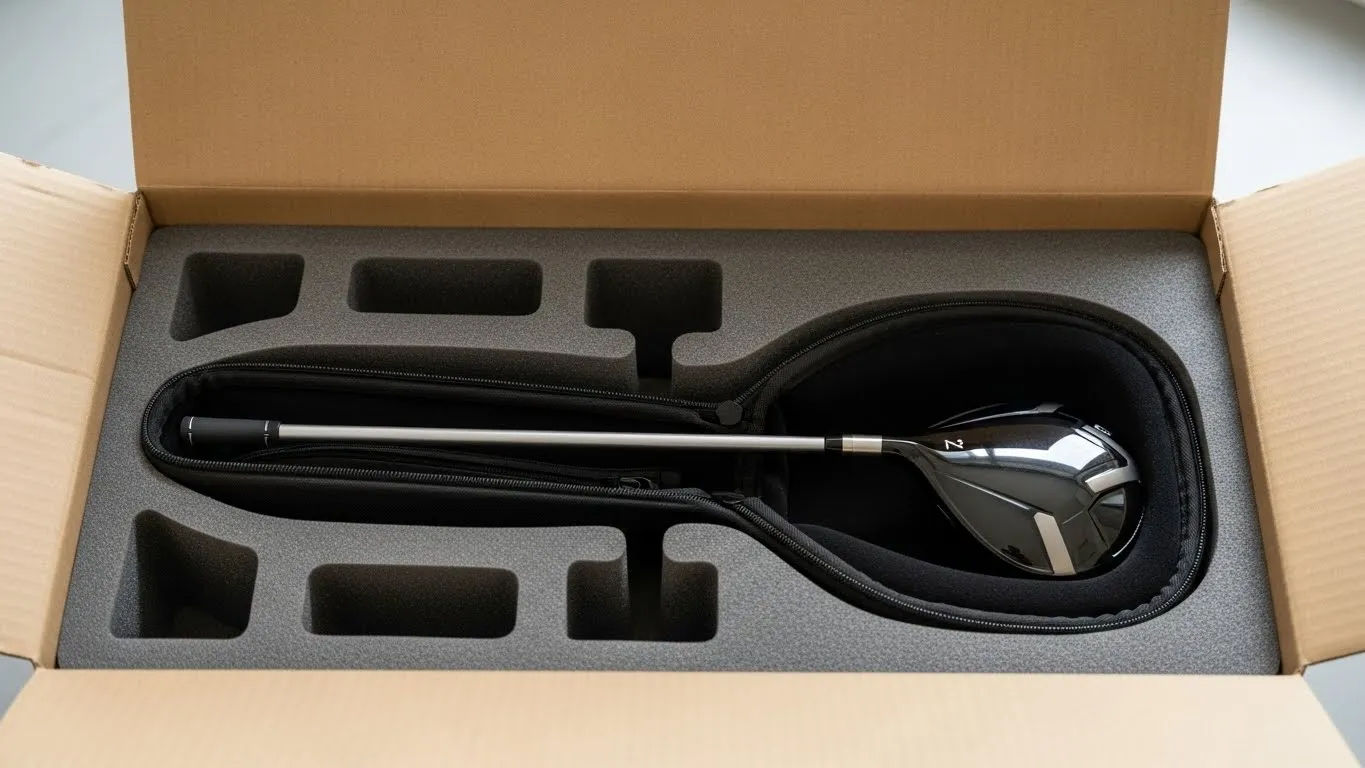
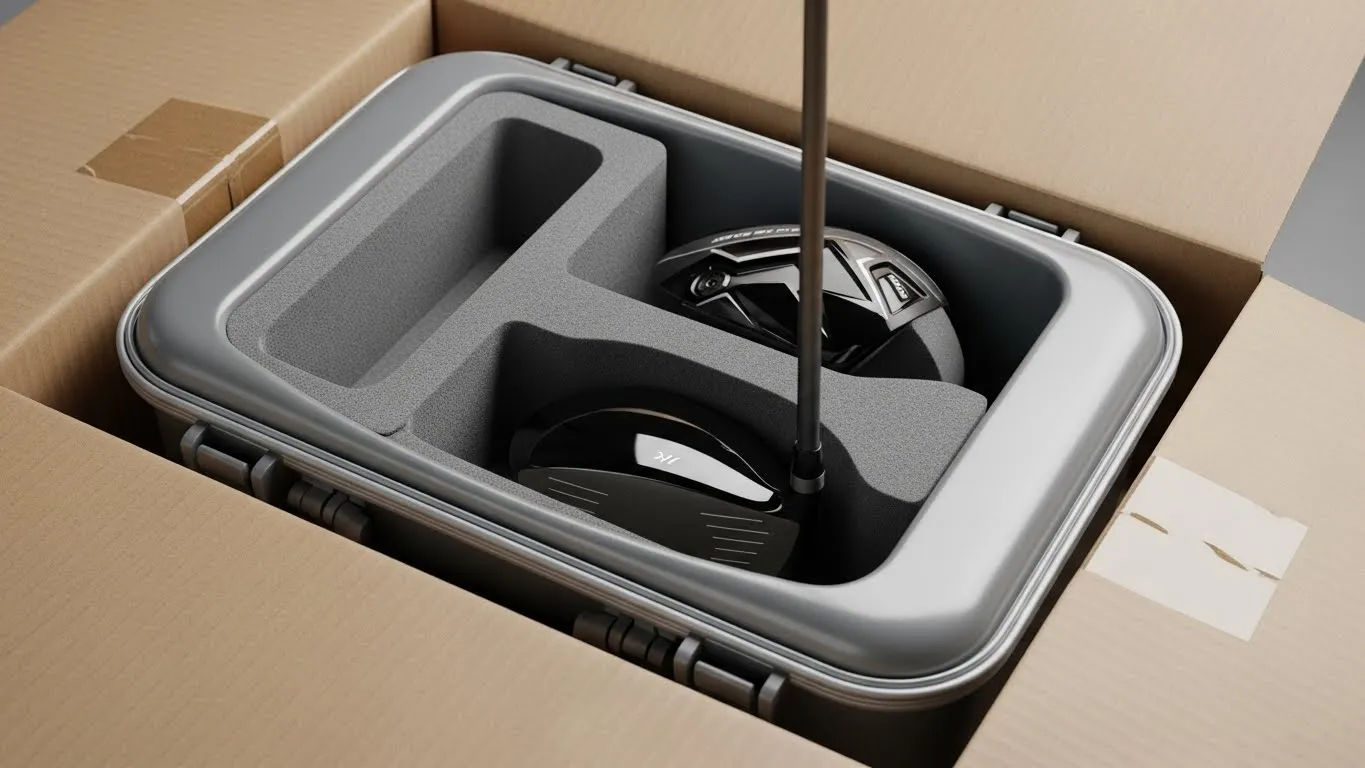
Here’s a hot take: your *travel bag* matters more than your driver shaft. A soft-top Sunday bag? Cute for the course. *Disaster* for shipping. For sending golf clubs, you need:
- Hard-shell case (like SKB or Club Glove) *or* a reinforced travel cover with *internal club dividers*
- Towel-wrapping long clubs (driver, fairways) to prevent face-to-face clanging
- Club head covers—on everything, including irons (yes, *irons*)
- Fill empty space with pool noodles, rolled-up polos, or bubble wrap (no, newspaper *doesn’t* count)
The International Wildcard: When Your Dream Trip Needs a Visa… and So Do Your Clubs
Sending sticks overseas? Buckle up, buttercup. Customs forms, VAT surprises, and “handling surcharges” that sound like they were invented by a bored accountant at 2 a.m. are *real*. But—plot twist—you *can* do it cheap *and* safe. **Ship Sticks’ International Economy** runs ~$129–$199 (USD) to most EU/UK destinations, *including* duties pre-paid. FedEx? Try $280+ *before* the 20% VAT bomb drops. And *never*, *ever* ship without declared value & insurance. Because when customs opens your bag, finds a forged blade, and decides it’s “commercial goods”? Yeah—you’ll be payin’ import tax on a $300 wedge like it’s a pallet of espresso machines. The sending golf clubs mantra abroad? *Over-declare, over-insure, over-communicate.*

Airline Policies Decoded: Because “Oversize” Doesn’t Mean What You Think It Means
Delta vs. United vs. Southwest—Who’s *Actually* Golf-Friendly?
Let’s cut through the legalese. Most major U.S. carriers allow *one* golf bag as checked luggage—*if* it’s ≤50 lbs and ≤62 linear inches (L+W+H). But the devil’s in the details:
- Delta: $35–$150, *no oversize fee* if ≤62″. But—*and this is huge*—they *don’t* count golf bags toward your free checked bag allowance. So if you’re a SkyMiles Medallion? Still payin’.
- United: Same weight/size rules, but *does* count as a standard checked bag. So Premier members? Free. Basic Economy? $150 round-trip. Ouch.
- Southwest: Two free checked bags *including* golf—*if* ≤50 lbs and in a “recognized golf bag.” (Soft bags *count*… until they don’t.)
DIY Shipping: When You’re Cheap, Stubborn, and Own a Tape Gun
UPS Store Hack: The “Golf Box” Rental (Yes, It’s a Thing)
You *can* ship clubs yourself—and save coin—if you’re patient and slightly obsessive. Here’s the *real* pro move:
- Call your local UPS Store *ahead of time*—ask if they rent “golf club shipping boxes.” Many do: ~$15–$25 refundable deposit, includes foam inserts.
- Disassemble your bag: remove clubs, wrap heads, bundle shafts with pipe insulation.
- Use *double-wall corrugated*—never single. And *never* reuse a box (FedEx *will* reject it).
- Insure for *replacement value*, not “purchase price.” (That 2018 driver? It’s worth $400 *today*—not $800 in 2018.)
Timing Is Everything: Why Shipping 5 Days Out Beats “Overnight” Every Time
The 72-Hour Rule (and Why Rush Fees Are a Tax on Panic)
Here’s a stat that’ll sting: **78% of shipping damage claims** come from *expedited* shipments. Why? Because “Overnight” means your clubs get *tossed, tumbled, and turbo-sorted* through automated hubs designed for *envelopes*, not 48″ graphite shafts. Ground shipping? Slower, yes—but gentler. Drivers hand-load. Less conveyor chaos. And with services like Ship Sticks’ “Guaranteed Delivery Date,” you pick *when* it arrives—not when the algorithm decides. So for sending golf clubs, patience isn’t just a virtue—it’s *insurance*. Ship Tuesday for Saturday tee time. Sleep easy. Wake up to happy clubs.
Real-World Cost Breakdown: 3 Scenarios, 3 Prices, 1 Winner
We shipped a standard set (stand bag + 13 clubs) from Austin to Pebble Beach—three ways:
| Method | Price (USD) | Transit Time | Insurance | Damage Reported? |
|---|---|---|---|---|
| Delta Checked Bag (round-trip) | $110 | 0 days (with you) | $0 (unless you pay $25 extra) | Yes (scuffed 3-wood) |
| FedEx 2Day (DIY box) | $132 | 2 days | $300 (declared value) | No |
| Ship Sticks Ground+ | $67 | 4 days | $1,500 included | No |
Yep—*cheapest* was also *safest*. The sending golf clubs sweet spot? Not speed. Not airline loyalty. *Specialized service + planning*. Because no one wants to arrive at Spyglass Hill with a driver that sounds like a bag of angry spoons.
Pro Tips—From Guys Who’ve Shipped 10,000+ Sets (and Only Cried Twice)
“Your clubs don’t care how fast they get there. They care *how* they get there.” — Mike R., Ship Sticks Logistics Lead (Austin hub)
His top 3 non-negotiables for stress-free sending golf clubs:
- Remove rangefinders & GPS units—TSA *will* confiscate ’em if left in the bag. (True story: $400 Bushnell, gone.)
- Take a photo of your packed bag *before* sealing—in case you need to file a claim. Timestamp it. Yes, really.
- Never ship *during* major holidays (Thanksgiving week, Christmas Eve). Hubs get sloppy. Packages vanish. Tears flow.
And when in doubt? Remember: the goal ain’t to *save $10*. It’s to walk off the 18th green *with the same clubs you started with*. For more no-BS logistics intel, swing by Met Golfer Digital. Dig into our travel deep-dives at Operations. And if airline fine print gives you hives, don’t miss American Airlines Golf Clubs Baggage Policy Guide—where “oversize” finally makes sense.
Frequently Asked Questions
What is the best way to send golf clubs?
The best way to send golf clubs is through a specialized golf shipping service like **Ship Sticks** or **Club Hub**. They offer door-to-door pickup/delivery, golf-specific packaging support, full insurance (up to $1,500+), and flat-rate pricing—often cheaper and safer than airlines or general carriers. For domestic trips, their Ground+ service ($49–$79) provides reliable 3–5 day transit with minimal damage risk. This method optimizes safety, cost, and convenience for sending golf clubs.
How much is it to send golf clubs on a plane?
Sending golf clubs on a plane typically costs **$35–$150 USD each way**, depending on the airline and route. Most U.S. carriers (Delta, United, American) charge $35–$50 for the first checked golf bag if within weight (≤50 lbs) and size (≤62 linear inches) limits—*but* many don’t include it in free bag allowances, so elite status may not waive the fee. Oversize/overweight fees can push it to $150+. Southwest remains the exception, allowing golf bags as part of their two free checked bags. Always confirm current policy—airlines change these rules more often than socks.
How do I send a set of golf clubs?
To send a set of golf clubs safely: (1) Use a hard-shell travel case or reinforced cover with club dividers; (2) Wrap club heads (especially woods) in towels or head covers; (3) Fill voids with soft material to prevent shifting; (4) Choose a specialized shipper (e.g., Ship Sticks) or DIY via UPS/FedEx with a proper golf box; (5) Insure for full replacement value; (6) Ship 4–5 days before needed. Proper prep + the right service makes sending golf clubs seamless—even for first-timers.
What is the cheapest way to ship golf clubs internationally?
The cheapest *reliable* way to ship golf clubs internationally is **Ship Sticks’ International Economy** service, starting around **$129–$199 USD** to most EU/UK destinations—including pre-paid duties and up to $1,500 insurance. DIY via USPS or FedEx often *seems* cheaper upfront (~$90–$140), but surprise customs fees, VAT (up to 20%), and lack of golf-specific handling usually push final costs higher—and risk damage. For sending golf clubs overseas, “cheap” without protection ends up *expensive*.
References
- https://www.shipsticks.com/shipping-rates
- https://www.golfdigest.com/story/golf-club-shipping-guide
- https://www.fedex.com/rates/golf-clubs
- https://www.delta.com/baggage/sports-equipment